Technology Rapidly Reshaping the Future of Funding
Lalitha J
Written By
Digital Finance Revolutionizing Finance Services in Chennai
The financial landscape is undergoing its most significant transformation since modern history began. People used to acquire capital through physical bank branches by filling out extensive documents and waiting several weeks for decisions, which often ended in denial because of standard credit assessment methods. Digital finance services in Chennai emerged through the combination of fintech innovations and artificial intelligence and mobile-first systems, which together created new pathways for people and businesses who previously lacked access to formal lending.
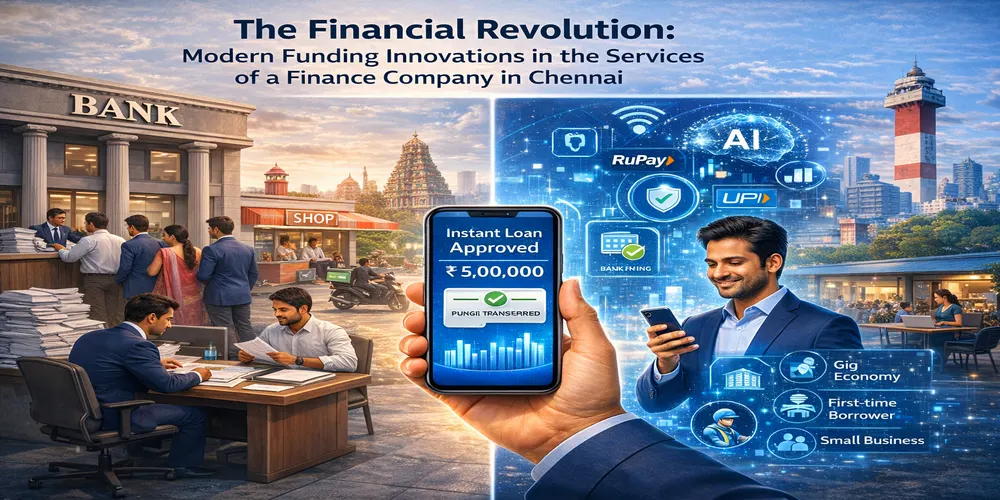
The Financial Revolution: Modern Funding Innovations in the Services of a Finance Company in Chennai
The public and business sector turned to commercial banks and cooperative societies and non-banking financial companies (NBFCs) to obtain loans and save money and make fund transfers and conduct other financial activities. The institutions faced limitations because they depended on outdated systems, their service areas were restricted, and their risk assessment processes only accepted collateral and formal employment verification. The Chennai-based finance company has implemented technology-driven lending solutions to fulfill its requirements for contemporary capital distribution, which allows faster funding access to a wider range of customers.
The financing system provided credit access for salaried professionals and businesses with existing records but restricted access to other applicants.
Digital finance exists to resolve this specific systemic financial gap.
India’s Digital Finance Boom: The Fintech Revolution
The fintech sector in India stands as one of the fastest-growing industries throughout the entire world. Per industry estimates, the digital lending market in the country reached a valuation of approximately USD 270 billion during 2022 and is projected to surpass USD 515 billion by 2030 at a compound annual growth rate (CAGR) above 13 percent.
The detailed information about transactions serves as an economic measurement, but it also functions as the essential input for developing future credit assessment systems.
Leaping Over the Credit Bureau: AI in Credit Scoring
The existing credit scoring systems depend on assessment of historical borrowing patterns together with official financial documentation, which, in particular, 190 million Indians without credit history do not possess.
Fintech companies use machine learning algorithms to analyze multiple data sources, which include mobile recharge patterns and utility bill payments and e-commerce transaction history and social media activities and loan application behavioral information.
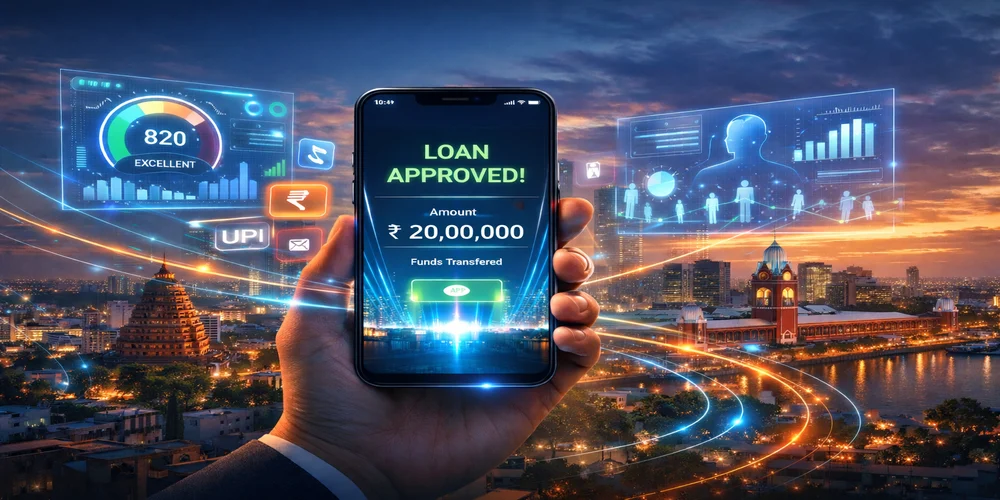
The outcome creates a significant shift. Traditional loan approval procedures required two to four weeks for completion, while AI-powered systems deliver credit decisions within 60 seconds and complete fund distribution in one day.
Business owners need to access working capital immediately because fast funding processes have become vital for success in today’s competitive environment.
Automated Underwriting and Digital KYC
The application of Aadhaar biometric authentication together with video KYC and document verification through OCR allows lenders to onboard borrowers within minutes from remote locations while maintaining secure operations.
The automated underwriting systems develop risk profiles through their use of real-time data obtained from account aggregators and GST records and banking APIs. The system reduces processing expenses for lenders while removing all potential bias and subjectivity that could have affected the manual underwriting procedure.
The result produces a lending environment that bases its decisions on data while maintaining a fairer system.
Finance in Every Pocket: Mobile-First Lending
The smartphone has evolved into the strongest device, which lets users from every economic level access financial services. Mobile-first lending platforms enable a Tamil Nadu farmer, a Rajasthan street vendor, and a Bengaluru freelance designer to apply for and receive and manage loans through their mobile phones without visiting a bank branch.
The underprivileged community now has better access to financial services because of new features that enable users to navigate through voice commands and use their native languages and manage loans through WhatsApp.
Alternative Lending Models and Embedded Finance
E-commerce platforms now provide instant seller financing to their users. The ride-hailing applications use their driver partners' trip data to provide them with microloan options. Agri-tech platforms provide crop loans to farmers based on their estimated agricultural production and satellite-based field monitoring data.
The capital access market has expanded its lending options through the introduction of peer-to-peer lending platforms, revenue-based financing for SaaS companies, and buy now, pay later (BNPL) systems. The startup businesses and small enterprises can use alternative lending methods to obtain funding through a trusted finance company in Chennai which protects their digital assets and delivers revenue streams although they do not fulfill standard banking requirements that demand particular business assets and operational experience.
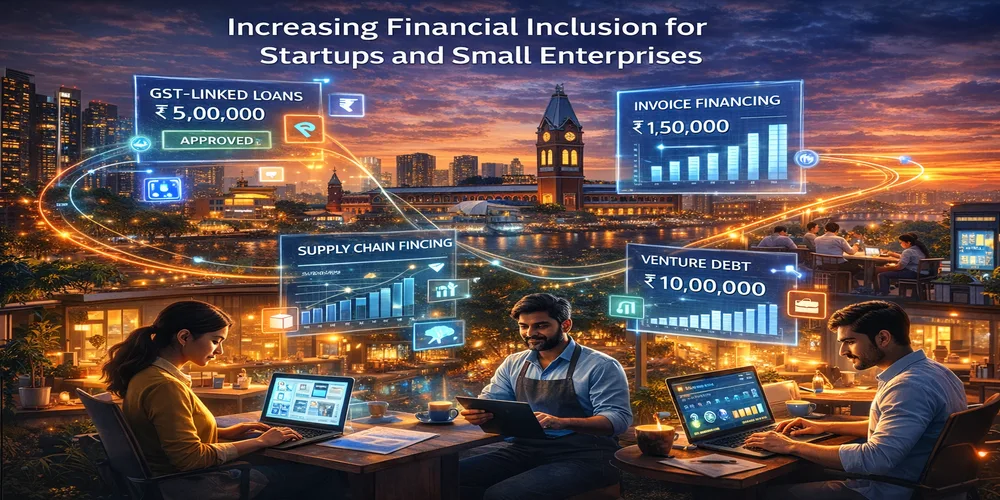
Increasing Financial Inclusion for Startups and Small Enterprises
- The MSME sector has experienced a credit shortfall that exceeds USD 530 million because businesses require more funding than they have received so far.
- Small businesses can access capital through supply chain financing platforms and GST-linked loan services and invoice discounting systems which enable them to obtain funds that were previously unavailable because their receivables remained inaccessible.
- Startups now have access to two funding options, which include venture debt and revenue-based financing platforms, because these solutions provide capital without requiring equity ownership from founders.
- The transition to digital banking provides first-time borrowers with better advantages. Thin-file credit products, which provide low-cost loans to young professionals and first-generation earners, help them build credit history through their access to formal finance. The Chennai financial services ecosystem now includes digital platforms that offer well-designed products and transparent pricing to serve this market segment.
The Path Ahead: Conscientious Innovation
The current lending process requires new ethical AI solutions and data protection measures and responsible loan assessment methods because its operational speed has reached unprecedented levels.
The Reserve Bank of India guidelines for digital lending and the Account Aggregator framework establish necessary protective measures that ensure that innovative solutions will benefit borrowers instead of exploiting them.
The Role of a Loan Agency in Chennai in Modern Lending
Borrowers who work with trustworthy lending agencies can still experience major advantages in their current environment.
Modern financial services use artificial intelligence (AI) along with data intelligence and mobile platforms to reach customers who traditional banking systems have failed to serve. A trustworthy loan agency in Chennai assists borrowers to find their current financing options, which they require to obtain funds.
Conclusion
The future of finance will be determined by institutions and platforms and professionals who focus on creating transparent systems while including all people and empowering their borrowers.
FAQ
1. What are the differences between the digital system and the traditional banking approaches?
Digital lenders use AI-based systems and mobile platforms to process loans far faster than traditional banks. They deliver funds within one day to salaried workers, MSMEs, and first-time borrowers.
2. Is digital lending safe, and what kind of security is there for the protection of my personal data?
Digital lenders in India follow RBI digital lending rules and the Account Aggregator framework for data protection. The rules introduce fair loan terms, which in turn shield borrowers against fraudulent lending activities.
3. Can one be able to get a loan with no credit history from an online loan market?
The AI system uses alternative data sources to assess creditworthiness which includes information from utility bill payments and mobile recharge records and UPI transaction details. The system enables formal lending access to approximately 190 million Indians who lack traditional credit bureau records.